Culture
Abu Bakr Just Won't Go Away
Last month I asked my wife to stop calling me Abu Bakr. It turns out I had the wrong person.
October 2026
Culture
Last month I asked my wife to stop calling me Abu Bakr. It turns out I had the wrong person.
October 2026
A month ago I wrote a thousand words to turn down a compliment. My wife had called me Abu Bakr, and I laid out what the show does to men: the rescues, the impossible standard, piety sold as a character reference. It was thorough and reasonable, and it changed nothing.
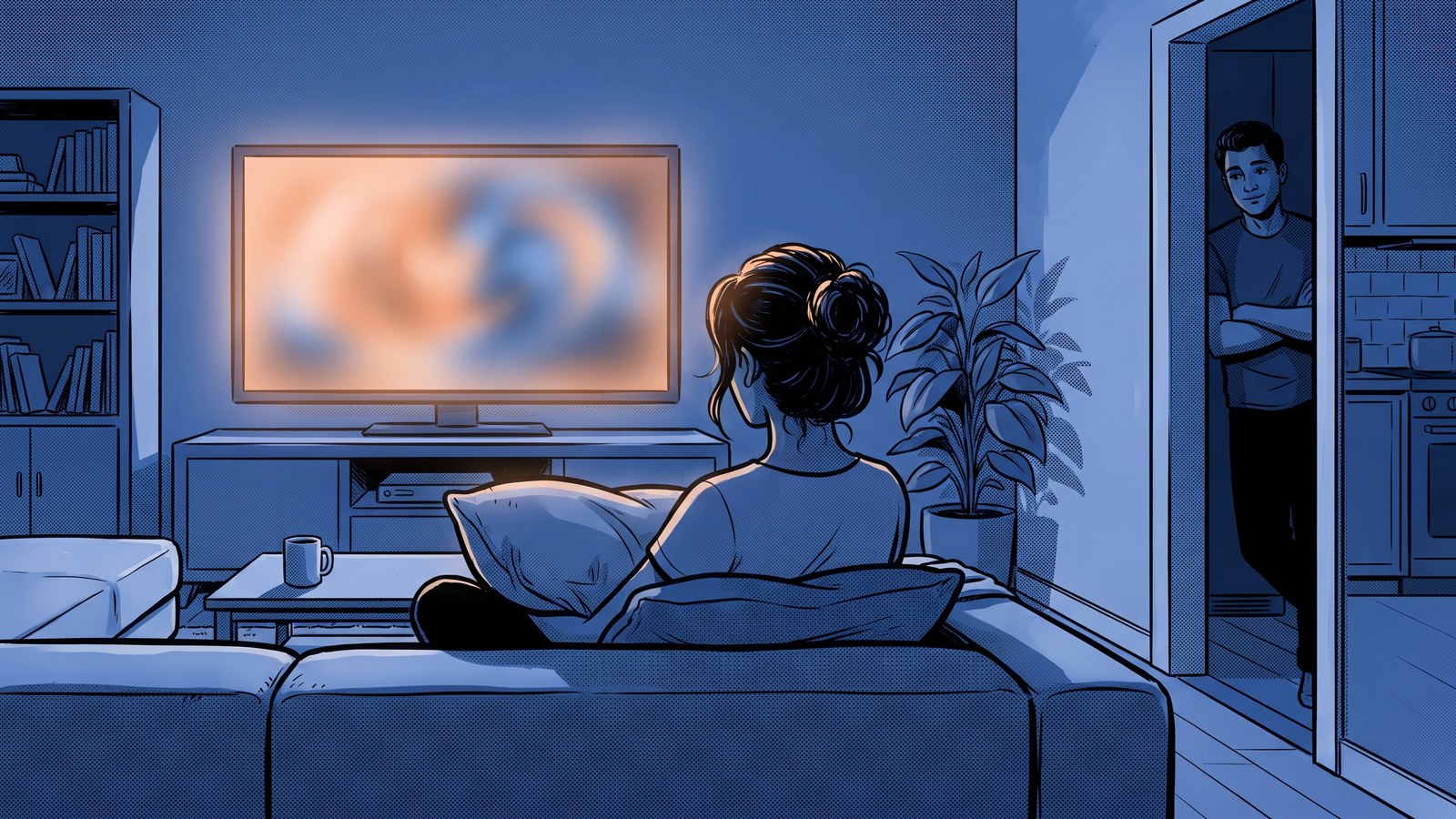
Every Friday and Saturday he is back in our house, calm, patient and softly spoken, a man who has never once said "in a minute" or been put on hold with Rogers. My wife watches him from the couch, and in between episodes she sends me reels explaining why the show is so good.
So this is the other half. Not what Dar-e-Nijaat does to husbands, but what it tells the women watching it. I've seen about four episodes, which turned out to be plenty.
Lesson one: if a woman sleeps with a man, she pays for it and he doesn't. He gets to find God, which turns out to be very flexible about timing, and she gets panic attacks. It's the oldest arrangement in South Asian storytelling, delivered with better lighting.
Lesson two: women don't heal, they get collected. A good man turns up, talks her down like a very handsome breathing app, and marries her. In this genre, "finding yourself" means being found.
Lesson three: the ideal man checks with his mother first. The show makes very sure you know Abu Bakr is a devoted son. A son who obeys is husband material. A daughter who disobeys is a cautionary tale with excellent wardrobe. It's the same rule with two different prices.
Now look at the hero those lessons produce. Abu Bakr has no wants of his own. His whole job is to absorb other people's decisions: the man who walked out, the mother who signs off, the woman who needs saving on a schedule. He waits, he forgives, he says the right thing at the right volume, and then he asks permission. In one of the four episodes I saw, the entire plot was Abu Bakr driving her to her parents' house, and that was all that happened for thirty minutes. On Pakistani television that counts as a grand romantic gesture, but where I live it's called giving someone a lift. He even listens to tilawat while he drives, and the show treats that as proof of piety, as if holiness were a radio setting.
The show calls this the most romantic man on Pakistani television. I'd call him a doormat with a nikah certificate.
Not because he's kind, but because he has never once wanted anything for himself, and the show is selling that as the dream.
That's the real message for women, and it's worse than the rescue. Men come in two models: there's the one who takes what he wants and leaves, and there's the one who wants nothing and asks his mum, and you're expected to pick one. Nobody in this show seems to have met a man who wants things and still treats you well, which is a shame, because that's most of the decent men I know, and all of them forget the milk.
I have said all of this to my wife, more than once. She ignores it completely and replies with reels in the show's defence. One of them was nothing but scenes of Abu Bakr being patient, one after another, which is the most passive-aggressive thing anyone has ever sent me. So I've given up, and I never asked her to stop watching in the first place.
Her case fits in a sentence. She watches because it makes her feel good.
Why my wife loves this show is beyond me. Then again, why I love John Wick is beyond her, and if we're judging things by their message, I should tread carefully. John Wick's wife dies, someone kills the puppy she left him, and his way of processing grief is to shoot most of the Russian mob. Nobody suggests therapy, because men don't heal in that film either; they just reload. I've never once watched it for the lesson, and nobody has ever suggested I should.
The difference is that John Wick is a man in a good suit shooting people, and it knows exactly what it is. Dar-e-Nijaat is sold as something better than entertainment, a story about faith and redemption, and Abu Bakr is held up as the man women are supposed to want. Fans online say he has raised their standards, but nobody has ever walked out of John Wick with higher standards.
I know this is starting to sound like men versus women, and it isn't quite that. Somewhere there is a man quietly in love with Abu Bakr, and a woman who has watched every John Wick film twice. For all I know they're married to each other, having the same argument the other way round.
Last time, my wife called me her Abu Bakr because I listen. I've been thinking about that, and I think she got the casting wrong.
Look at who in this house is patient. Who hears every complaint I make, ignores it without a word, and answers with a reel instead of a raised voice. Who watches every episode on her own, though I know she'd like me beside her, because she also knows I'd talk through the whole thing and ruin it for her. Sitting through it in silence would be torture for me, so she doesn't ask.
The calm one, waiting for someone else to come round, isn't me. My wife is Abu Bakr.
Unlike him, though, she wants things, and she gets them. She watches her show on her own terms, doesn't need to win the argument at all, and is still kind to the man complaining from the other room. She's the third kind of person the show forgot to cast.
And maybe that's the sad part of why he's so popular. Maybe women don't love Abu Bakr because he's the man they want. Maybe they love him because they recognise him: the one who waits, forgives, keeps the peace and checks with the family first. They've been doing it for years, and this time someone has cast a man in the role and called it romantic.
I don't know if that's true of my wife, and she has never needed me to agree with her anyway. Instead I wrote this, which I'll admit has been the most satisfying thing I've done all week, and I suspect that's roughly how she feels when the episode starts on a Friday night. It makes me feel good too.
Abu Bakr isn't going away, and he doesn't need to, since I married him.
No spam, no algorithm deciding when. Just the next one, whenever it's actually ready.
Opens Buttondown in a new tab to confirm your subscription. Powered by Buttondown.