Culture
From Bombay to The Taj Story
How a beautiful film first made me feel like a guest, and what changed between one cassette and one scroll.
July 2026
Culture
How a beautiful film first made me feel like a guest, and what changed between one cassette and one scroll.
July 2026
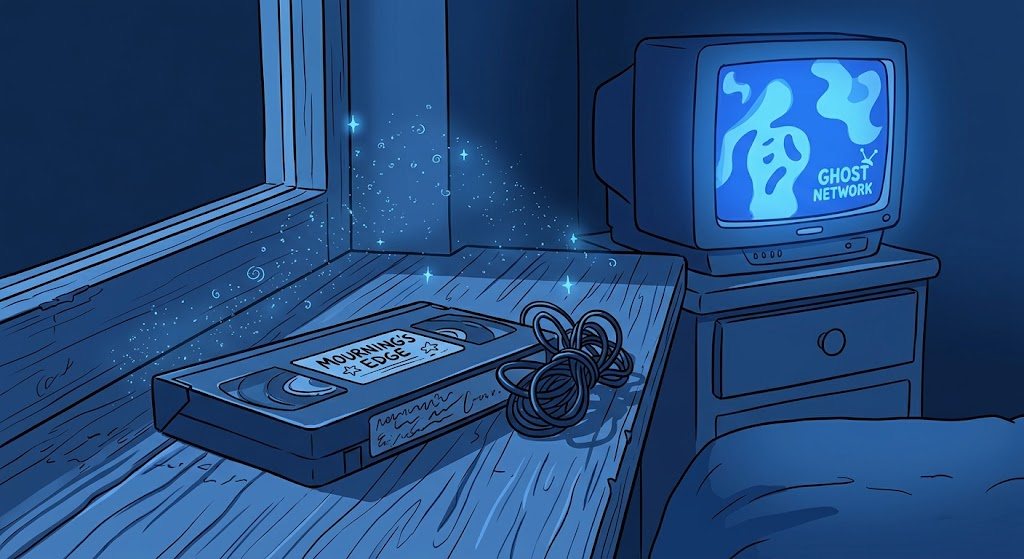
I was a boy, alone in my room in Dhaka, watching a pirated VHS tape of Bombay.
It matters that I was watching it at all. I had spent a few years living in England with my family, and it quietly rewired what I expected from stories and from music. When we moved back to Dhaka, I brought that awareness with me like a piece of luggage I couldn't put down. Bollywood, seen from that new angle, was hard to take seriously. Not out of snobbery, but because I could now see the seams: the song that sounded like a Western pop hit from two years ago, the plot lifted from an American film most people hadn't seen but some of us had. I had stepped outside the formula. I couldn't step back in.
Then the music arrived, months before the film did. A.R. Rahman's soundtrack was everywhere in Dhaka that year, drifting from shops, playing in rickshaws, bleeding through the walls of neighbouring flats. Humma Humma. Kehna Hi Kya. I'd be channel surfing, and the moment it came on I would stop and just listen, which for a restless teenager with a remote control was saying something. It didn't sound like the Bollywood I had written off. It didn't sound like an imitation of anything. It sounded stubbornly itself.
I bought the cassette on one of my regular trips to the music store, the same trip I picked up the Smashing Pumpkins' Siamese Dream. My allowance stretched to two or four tapes a month, so spending one on a Bollywood soundtrack was not a casual decision. I played it on repeat for weeks before the film was even available to rent.
When it finally was, I watched it alone, on a small television, the way you watch something you're not ready to admit has already got to you.
Manisha Koirala was extraordinary, with a stillness that kept a role that could easily have been a symbol from becoming one. But the love story left me cold. I had seen enough longing glances and songs in fields. I hadn't rented the tape for romance. I wanted something that grappled with the real world.
Then the riots came: the burning, the smoke, a family pulled apart in the noise. And something felt off. Not in the violence, but in how the Muslim characters were drawn inside it.
I had grown up on Hindi films where Muslim characters simply existed. In Coolie, Amitabh Bachchan himself plays Iqbal, a Muslim railway porter, and he is the hero. In Deewar, the badge numbered 786 that he wears through the whole film is given to him by Rahim Chacha, an old Muslim dock worker, and nobody remarks on it. Nobody needs to. In those films the world was crowded and composite and unselfconscious, and a Muslim was as ordinary and as human as anyone else on screen.
Bombay was the first time I was old enough to notice that the camera had an attitude, not just a view. It was tilted, somehow, like a picture hanging slightly crooked on a wall.
I finished the tape with a feeling I couldn't name. It wasn't offence. It was quieter than that, a low hum underneath everything. The film was about riots barely two years old, riots that had killed around nine hundred people, most of them Muslim. I was a Muslim boy in Bangladesh. And somehow I came away feeling like a guest in a story that should have been mine.
I returned the tape and didn't talk about it. Then I stopped watching Bollywood, properly this time: a film every few years, when something unavoidable crossed my path. That distance never fully closed.
It took me years to understand what the music had been doing. Great film music doesn't just accompany images. It argues for them. It tells you which emotions are correct and when to have them. Kehna Hi Kya, in K. S. Chithra's voice, had told half a continent how to feel about this story before anyone had seen it. And when the city burns, Rahman is there too, making the horror achingly, unbearably beautiful. You don't interrogate a film while the music is pulling you under. You absorb it, and you carry it home.
Perhaps I'm reading backwards. I'm a grown man in Toronto, watching India's cultural landscape shift in ways that alarm me, and it's possible I'm pressing that alarm onto a film that was simply imperfect: a well-meaning work, with blind spots, by a talented director trying to do something hard. Mani Ratnam was depicting events most Indian cinema wouldn't touch, and he put a Muslim woman at the centre of a mainstream love story. I want to hold that possibility honestly.
But I don't think it explains what I felt in that room.
Shaila Bano is loving and luminous, and largely passive. She exists to be loved, to be protected, to stand for what violence destroys. The question of why the Babri Masjid fell, and which movement had spent years building toward that day, is kept carefully offscreen. What's left is a tragedy without an origin, violence that arrives from nowhere, like weather. The film was asking me to grieve without asking me to understand.
Looking back, it feels like a story about Muslim suffering told mainly for a Hindu audience, one that needed reminding of its neighbours' humanity. I was not that viewer. I was the subject of the lesson. Bombay made its intended audience feel liberal and large-hearted. It made me feel like a problem that had been handled with taste.
It made me feel like a problem that had been handled with taste.
For years after that, Bollywood stayed at the edge of my life, and I met the films that followed only in fragments: a trailer, a clip someone shared. Sarfarosh. Mission Kashmir. Enough to feel the familiar tilt, the Muslim as outsider or threat, the problem the story has to navigate around. Jodhaa Akbar, in 2008, briefly loosened something in my chest. So it was still possible. The feeling didn't last.
Years later I came across the Kashmir Files trailer the way I came across most things by then: scrolling, not looking for it. I watched maybe ninety seconds before putting my phone down. What struck me wasn't the anger. It was how little it needed to hide.
Now Bollywood finds me whether I choose it or not. My wife loves it the way I loved it before England, freely, without audit, and the algorithm has learned her taste and applies it to me. Some evenings I wander in while she's watching, and within five minutes I've named the Western song a number was lifted from. She finds it insufferable. I find it impossible to stop.
That's also how The Taj Story reached me: a recommended trailer, served up on the TV because of her viewing history. A courtroom drama built on the theory that the Taj Mahal was secretly a Hindu temple, a theory India's Supreme Court threw out in 2000, remarking that the man pushing it had a bee in his bonnet. Two minutes was enough. I glanced at my wife. She had already moved on to her phone, unbothered. It hadn't landed on her the way it landed on me.
What struck me was the distance between that trailer and the cassette I had saved my allowance for. Bombay needed two hours and one of the greatest film scores ever written to give a boy in Dhaka that low hum of unease. The Taj Story managed it in two minutes on a Tuesday afternoon in Toronto. When you no longer need beauty to smuggle the argument in, the argument has already won enough ground to stand in the open.
Mani Ratnam is not a villain, and I don't think the tilt in Bombay came from cynicism. But that doesn't change what the work did, or what it feels like to be on the receiving end of its compassion. The camera's sympathy was extended in my direction, but it wasn't quite for me. I was seen, but not recognised. Not excluded, not attacked. Just adjacent: a face in the background of someone else's story, included for texture.
There is one song I still can't talk over. Early in our relationship, my wife played Kehna Hi Kya in the car, just because she loved it, with no idea what it meant to me. When she plays it now, I'm back there in an instant. Not because the song brings back the film, but because it brings back the boy: the one who saved his allowance for a cassette, let a melody past his defences, sat alone with something he felt but couldn't name, then quietly returned the tape and said nothing.
That boy is still trying to find the words. These, I think, are some of them.
No spam, no algorithm deciding when. Just the next one, whenever it's actually ready.
Opens Buttondown in a new tab to confirm your subscription. Powered by Buttondown.