Sport
The First Time Is the Only Time
On being a Bangladesh cricket fan, and the one kind of joy you only get to feel once.
August 2026
Sport
On being a Bangladesh cricket fan, and the one kind of joy you only get to feel once.
August 2026
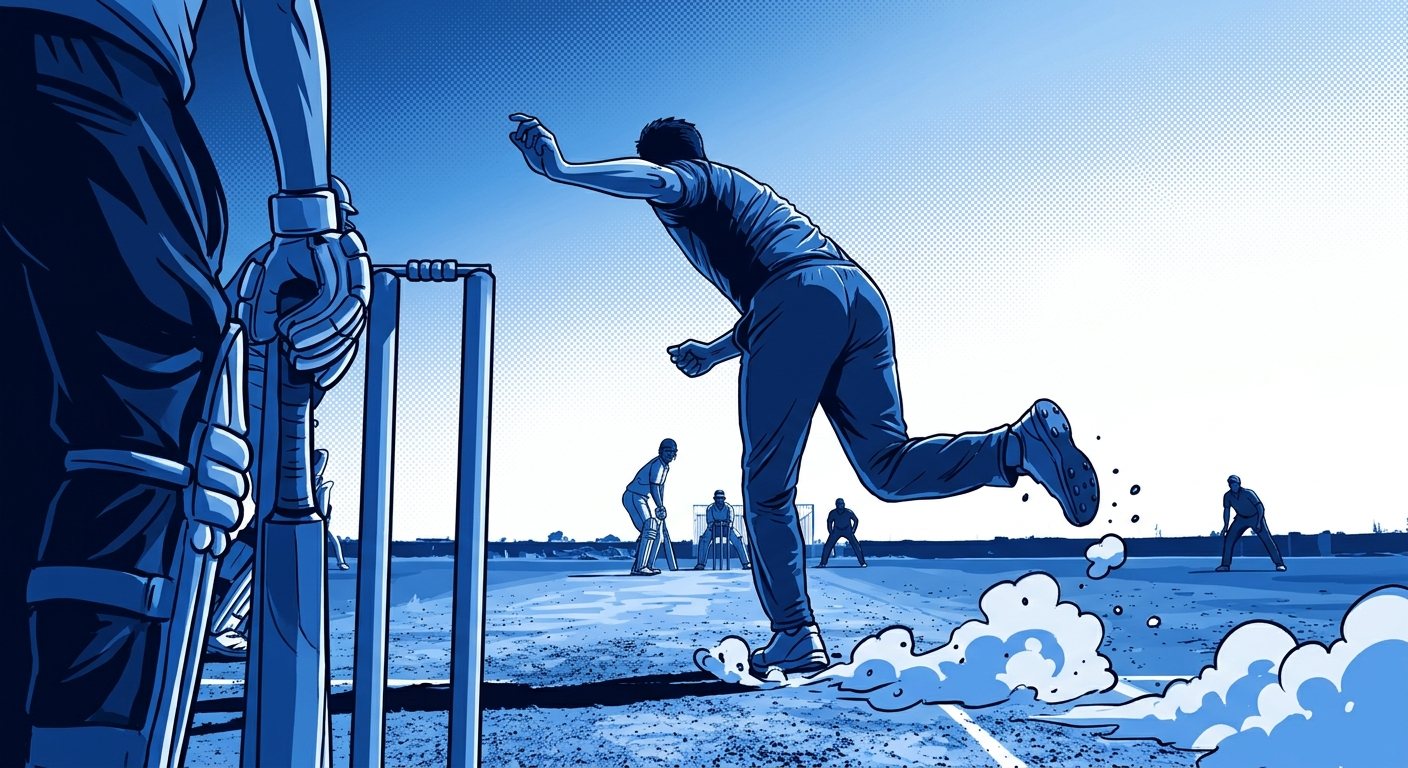
Supporting Bangladesh in Test cricket is less a hobby than a long-running exposure therapy that never quite takes. You go in every match already flinching. Somewhere in your nervous system there's a permanent settings file that reads "expect collapse," and no number of good days ever manages to overwrite it. This is, I've decided, the only sensible way to watch a team that has spent most of its Test history losing in creative new ways. You don't hope less because you love the game less. You hope less because hope, historically, has been the thing right before the collapse.
So when Bangladesh went to Darwin this August and started beating Australia, my first instinct wasn't joy. It was suspicion.
By the end of day one, Bangladesh had already bowled Australia out cheaply and were piling into what would become a huge first-innings total. A colleague of mine, an Indian cricket fan who follows the sport closely but has never had to survive supporting Bangladesh, caught me the next morning to tell me I shouldn't underestimate my own team. "Such is the life of a Bangladesh cricket supporter," I told him, which I meant as a full explanation. Whether he heard it that way or just filed it under false modesty, I couldn't tell you. He was reading the scorecard. I was reading the scorecard plus every other scorecard this team had ever produced for me, and the second file was a lot longer and a lot more convincing. There is a version of this collapse in my head at all times, fully rendered, ready to be pattern-matched onto whatever is actually happening. One good day wasn't going to ruin my ability to see it coming.
You hope less because hope, historically, has been the thing right before the collapse.
The next two nights I watched properly, from my own living room, and I remembered why Test cricket is the best version of this sport. There's no version of a T20 where a bowler quietly takes a match apart over five sessions, wicket by wicket, patience doing the work speed usually does, while on the other side an Australian batter grinds out a stubborn, unglamorous century just to keep his team's hopes alive. It still wasn't enough. Bangladesh needed only 57 to win.
Fifty-seven is nothing. Fifty-seven is also, if you have watched this team for any length of time, more than enough runs for something to go catastrophically wrong.
My wife and I had decided, on a whim, to spend the weekend at a beach town three hours from home, which is how I ended up watching the final day from a hotel room, on my phone, while my wife informed me that cricket commentary is not a soothing bedtime sound. I tried to explain the gravity of the situation: first-ever win in Australia, twenty-three years in the making, the kind of thing that doesn't happen twice in a fan's lifetime. She heard out the entire pitch with the patience of someone who has heard several versions of it before, and answered with her usual sweetness: "Okay. You can keep the volume up slightly. Instead of muting it." I took the concession, turned it down to a near-whisper anyway, and watched the last of Australia's wickets go down before watching the run count climb in almost total silence, which is its own specific form of stress. And then the winning runs went to the boundary, and Bangladesh had actually gone and done it, beaten Australia on their own turf, and I sat there in a dark hotel room, grinning like an idiot at a phone screen, while my wife slept, unfussed by what was actually transpiring.
The grin didn't leave for two days. I went to work, sat in meetings, made ordinary adult decisions, and somewhere underneath all of it was a man working his way through every post-match analysis and reaction clip YouTube could serve him. Not to confirm it had happened, but to wring every last drop out of the feeling while it lasted. I watched a visibly irritated Australian reporter try to explain what had gone wrong. I watched an Indian panel talk about Bangladesh with something that sounded, unmistakably, like genuine pride, aimed at a team that isn't even theirs. That's not a sentence I get to hear said about my team very often, and I have no idea when I'll get to hear it again, so I sat there collecting every version of it I could find, the way you'd keep refilling a glass you know is about to be taken away.
Here's the part that actually gets me, once the shock wears off. Some Bangladeshi kid born this year is going to grow up knowing that Bangladesh beats Australia in Test cricket sometimes. It'll just be a fact for him, filed next to other facts. He will never once get to feel what I felt watching that boundary go to the fence — that specific, load-bearing disbelief that comes only from having been conditioned, over decades, to expect the opposite. He gets to inherit the win. He doesn't get to inherit the flinch. It turns out the flinch, as miserable as it's been to carry around for twenty-odd years, is the only reason the boundary felt like that at all.
No spam, no algorithm deciding when. Just the next one, whenever it's actually ready.
Opens Buttondown in a new tab to confirm your subscription. Powered by Buttondown.